

Overview of Collaborating Physician Agreements
Collaborating physician agreements play a crucial role in healthcare by establishing a formal relationship between physicians to ensure proper patient care and compliance with regulatory requirements. These agreements Artikel the responsibilities, expectations, and legal obligations of all parties involved in the collaboration.
Purpose of Collaborating Physician Agreements
Collaborating physician agreements are necessary in various situations, such as when a physician needs supervision or oversight from another physician to provide certain medical services. These agreements are commonly required in settings like telemedicine, advanced practice nursing, and medical practices where physician supervision is mandated by law.
Key Components of Collaborating Physician Agreements
- Scope of practice: Clearly define the specific services and procedures that the collaborating physician is authorized to supervise or provide.
- Duration of agreement: Specify the start and end dates of the collaboration, along with any provisions for renewal or termination.
- Supervision requirements: Artikel the level of supervision needed, including regular oversight, availability for consultation, and review of patient cases.
- Compliance with regulations: Ensure that the agreement adheres to all state and federal laws regarding physician supervision and collaboration.
- Liability and malpractice coverage: Address issues related to liability insurance coverage for both the collaborating physician and the supervising physician.
- Termination clauses: Include provisions for terminating the agreement in case of non-compliance, breach of contract, or other unforeseen circumstances.
Importance of Collaborating Physician Agreements

Collaborating Physician Agreements play a crucial role in ensuring the smooth operation of healthcare practices and maintaining quality patient care.
Clear Roles and Responsibilities
Having clear roles and responsibilities Artikeld in a collaborating physician agreement helps in avoiding confusion and conflicts among healthcare providers. This clarity ensures that each party understands their obligations, leading to better coordination and communication within the team.
Benefits of Having a Collaborating Physician Agreement
- Enhanced Patient Care: A well-defined agreement ensures that patients receive comprehensive and coordinated care from multiple providers.
- Legal Protection: By formalizing the relationship between physicians, the agreement can help protect the interests of all parties in case of disputes or legal issues.
- Improved Practice Efficiency: Clearly outlining expectations and procedures can streamline workflow and increase the efficiency of the practice.
Risks of Not Having a Collaborating Physician Agreement
- Confusion and Miscommunication: Without a formal agreement, there is a higher risk of misunderstandings and miscommunications among healthcare providers, which can negatively impact patient care.
- Legal Vulnerability: In the absence of a collaborating physician agreement, providers may be exposed to legal risks, including liability issues and regulatory violations.
- Operational Inefficiencies: Lack of clarity regarding roles and responsibilities can lead to inefficiencies in practice operations, affecting the overall quality of care delivered.
Legal Considerations in Collaborating Physician Agreements
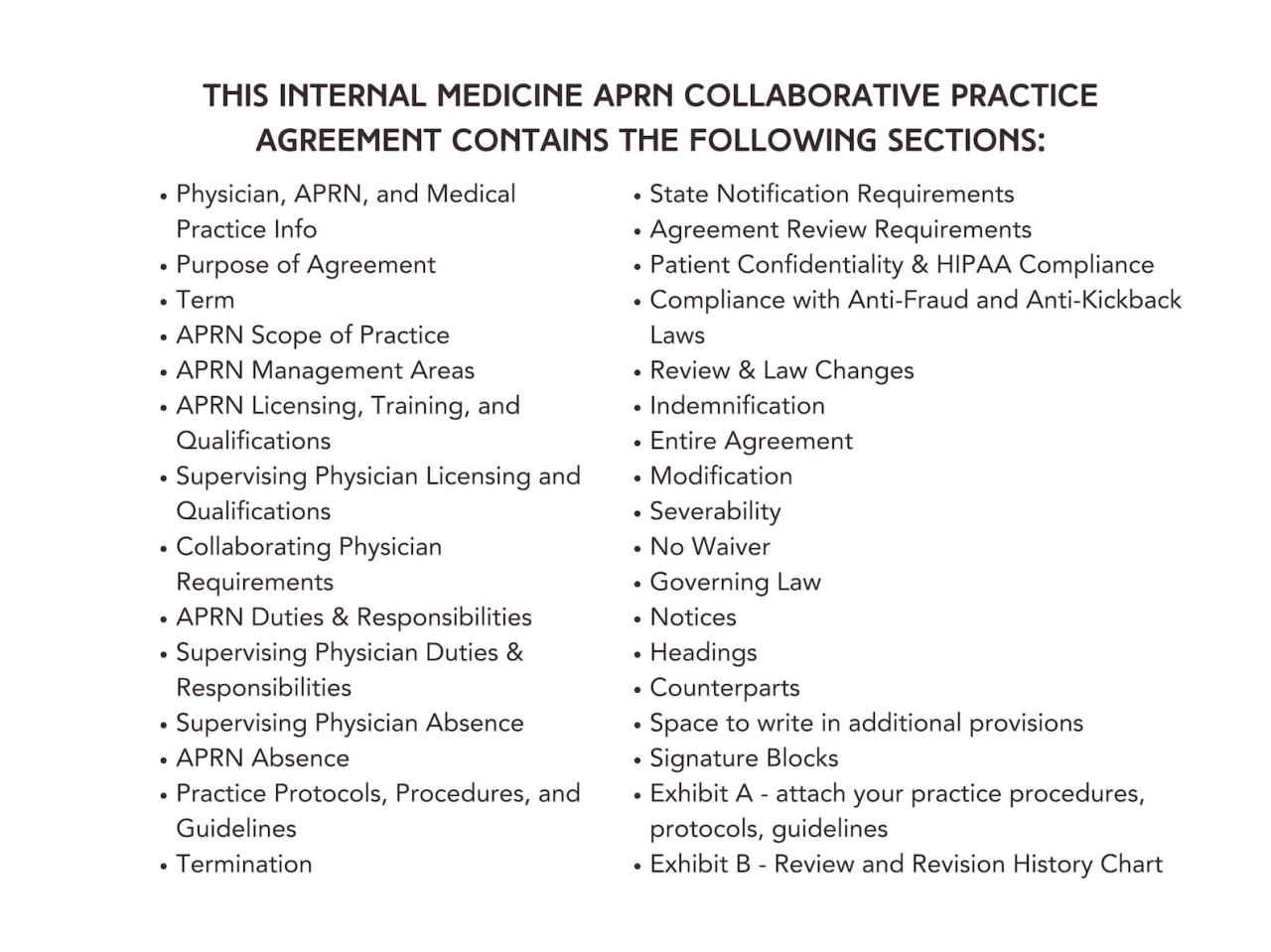
Collaborating Physician Agreements have significant legal implications for all parties involved. These agreements are crucial in outlining the responsibilities, obligations, and expectations of both the collaborating physician and the supervising physician. They help ensure compliance with state and federal regulations, protect the interests of all parties, and establish a clear framework for the collaborative relationship.
Compliance with State and Federal Regulations
Collaborating Physician Agreements must adhere to specific state and federal regulations governing the practice of medicine. These regulations vary by jurisdiction but generally focus on issues such as scope of practice, supervision requirements, prescribing authority, and patient care standards. Failure to comply with these regulations can result in legal consequences for both parties involved.
- Collaborating Physician Agreements must clearly define the scope of practice for the collaborating physician, outlining the specific duties and responsibilities they are authorized to perform.
- Supervision requirements, including the level of oversight and involvement of the supervising physician, should be clearly Artikeld to ensure compliance with state regulations.
- Prescribing authority should be addressed in the agreement, specifying the medications that the collaborating physician is authorized to prescribe and the procedures for obtaining approval from the supervising physician.
- Patient care standards must be established to ensure the quality and continuity of care provided by both physicians, protecting the health and safety of patients.
It is essential to consult with legal counsel when drafting Collaborating Physician Agreements to ensure compliance with all applicable state and federal laws.
Effective Communication in Collaborating Physician Agreements
Effective communication is essential in collaborating physician agreements to ensure clarity, alignment, and successful collaboration between healthcare professionals. Clear communication helps in establishing expectations, roles, responsibilities, and goals, ultimately contributing to the delivery of high-quality patient care.
Strategies for Ensuring Clear Communication
- Hold regular meetings or check-ins to discuss patient cases, treatment plans, and any challenges that may arise.
- Establish clear channels of communication, such as email, phone calls, or secure messaging platforms, to facilitate quick and effective information sharing.
- Document all communications and decisions made during the collaboration to avoid misunderstandings or disputes in the future.
- Encourage open and honest communication between collaborating physicians to address any concerns or issues promptly.
Importance of Documentation and Record-Keeping
Effective documentation and record-keeping play a crucial role in collaborating physician agreements by ensuring transparency, accountability, and legal compliance. Keeping detailed records of patient consultations, treatment plans, and shared responsibilities helps in tracking progress, evaluating outcomes, and resolving any potential disputes or discrepancies that may arise.
Resolving Conflicts or Disagreements
In collaborating physician agreements, conflicts or disagreements may arise due to differences in clinical approaches, patient management strategies, or communication breakdowns. To address these issues effectively, physicians can consider the following steps:
- Discuss the concerns openly and professionally to find common ground or alternative solutions.
- Seek input from a neutral third party, such as a mediator or legal counsel, to facilitate constructive dialogue and resolution.
- Refer to the terms Artikeld in the collaborating physician agreement to guide the resolution process and ensure compliance with agreed-upon protocols.
- If necessary, escalate the matter to higher authorities or regulatory bodies for further intervention or arbitration.
Collaborating Physician Agreements in Practice

Collaborating physician agreements are essential in the healthcare field to ensure coordinated care and optimal patient outcomes. Let's delve into some real-life examples, challenges, and benefits of these agreements.
Successful Collaborations under Collaborating Physician Agreements
- One successful collaboration under a collaborating physician agreement is between a primary care physician and a specialist. By working together closely, they can provide comprehensive care to patients with complex medical conditions.
- In another example, a hospitalist and a consulting physician collaborate effectively to ensure seamless transitions of care for patients admitted to the hospital.
Challenges in Implementing Collaborating Physician Agreements
- One common challenge healthcare providers may face is ensuring clear communication and understanding of roles and responsibilities Artikeld in the agreement.
- Another challenge is maintaining compliance with regulatory requirements and ensuring that all parties involved meet the necessary licensure and credentialing standards.
Enhancing Patient Care and Outcomes through Collaborating Physician Agreements
- Collaborating physician agreements can lead to improved patient care by promoting a team-based approach to healthcare delivery, where different providers work together towards a common goal.
- These agreements can also enhance patient outcomes by facilitating timely referrals, sharing of expertise, and ensuring continuity of care across different healthcare settings.
Commonly Asked Questions
What are the key components typically included in collaborating physician agreements?
Key components often include defining the roles and responsibilities of each physician, outlining communication protocols, and specifying how patient care decisions are made.
How do collaborating physician agreements enhance patient care outcomes?
By promoting clear communication, streamlining decision-making processes, and fostering a collaborative environment among healthcare providers, these agreements ultimately lead to improved patient care outcomes.